
Causes and Risk Factors of Parkinson’s Disease
Parkinson’s Disease (PD) is a progressive neurological disorder that affects movement and coordination, impacting millions of people worldwide. Despite decades of research, the precise causes of Parkinson’s Disease remain elusive. However, scientists have identified multiple risk factors that contribute to the likelihood of developing this condition. Understanding these causes and risk factors is essential for patients, caregivers, and healthcare professionals to improve early detection, prevention strategies, and treatment outcomes.
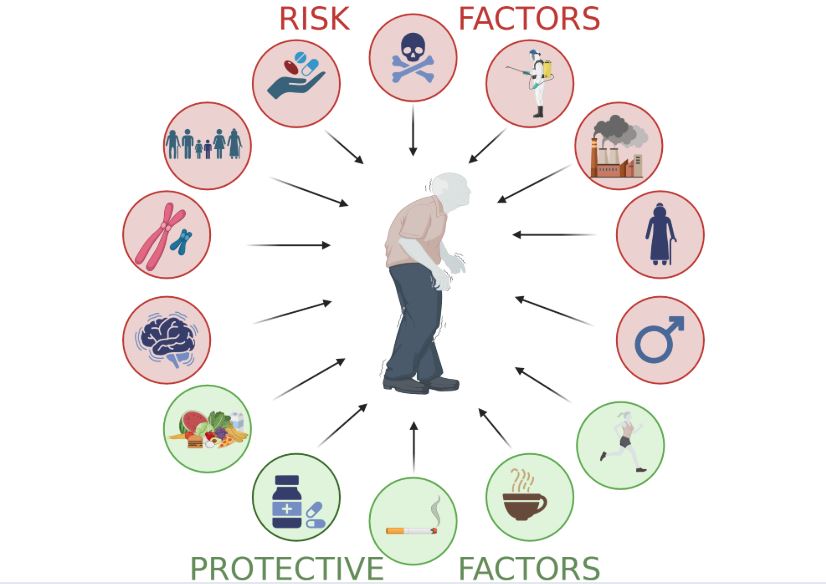
What Causes Parkinson’s Disease?
Parkinson’s Disease primarily arises due to the gradual loss of dopamine-producing neurons in a specific area of the brain called the substantia nigra. Dopamine is a critical neurotransmitter responsible for smooth, controlled muscle movements. When dopamine levels fall, motor symptoms such as tremors, stiffness, and slowness of movement begin to appear. While the biological mechanism is well understood, the underlying triggers for neuron degeneration are complex and multifactorial.
Genetic Factors: The Role of Inherited Mutations
Although most Parkinson’s cases occur sporadically, genetics play a significant role in a subset of patients. Research has uncovered several gene mutations linked to familial Parkinson’s Disease:
- SNCA gene: This gene encodes alpha-synuclein, a protein that accumulates abnormally in Parkinson’s patients, forming Lewy bodies—hallmark brain inclusions of the disease.
- LRRK2 gene: Mutations in this gene are the most common genetic cause of Parkinson’s and can lead to late-onset disease.
- PARK7, PRKN, and PINK1 genes: These genes are involved in protecting neurons from oxidative stress and mitochondrial dysfunction; mutations can increase vulnerability to damage.
Having a close relative with Parkinson’s slightly raises your risk, but it is important to note that most individuals with the disease do not have a clear family history. Genetic testing is available but typically reserved for research or cases with strong familial links.
Environmental and Lifestyle Factors: External Influences on Risk
In addition to genetics, environmental exposures and lifestyle habits significantly influence Parkinson’s risk. Numerous studies suggest that long-term exposure to certain toxins and chemicals can damage dopamine-producing neurons or interfere with brain function:
- Exposure to Pesticides and Herbicides: Agricultural chemicals like paraquat and rotenone have been linked to higher Parkinson’s incidence, especially in rural populations.
- Industrial Chemicals: Solvents and heavy metals such as manganese may contribute to neurodegeneration.
- Rural Living and Well Water Consumption: These factors may increase contact with environmental toxins, although research is ongoing to clarify their exact impact.
- Head Trauma: Repeated or severe head injuries have been associated with a higher risk of developing Parkinson’s later in life, possibly through chronic inflammation or direct neuronal damage.
- Protective Lifestyle Factors: Interestingly, epidemiological studies have found that smokers and regular caffeine consumers appear to have a lower risk of Parkinson’s. However, these findings do not justify smoking or excessive caffeine intake due to other serious health risks.
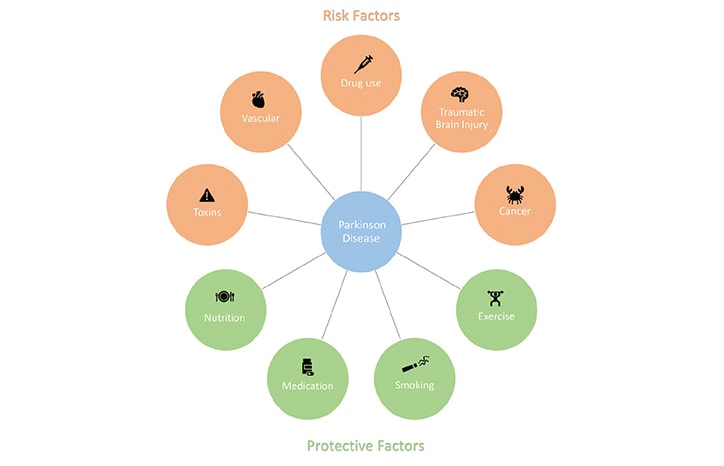
“Parkinson’s Disease is believed to arise from a complex interplay of genetic predisposition and environmental exposures, making personalized approaches to prevention and treatment essential.” — National Institute of Neurological Disorders and Stroke (NINDS)
Additional Risk Factors to Consider
Beyond genetics and environment, several other factors influence the probability of developing Parkinson’s Disease:
- Age: Parkinson’s is predominantly a disease of older adults. The risk increases significantly after age 60, although early-onset Parkinson’s can occur before age 50.
- Gender: Men are approximately 1.5 times more likely than women to develop Parkinson’s, though the reasons for this difference remain unclear.
- Ethnicity and Geography: Parkinson’s appears more common in Caucasian populations and less frequent in African and Asian groups, possibly due to genetic and environmental variations.
- Oxidative Stress and Mitochondrial Dysfunction: Cellular damage caused by oxidative stress and impaired energy production in neurons is a key factor in Parkinson’s pathogenesis.
- Inflammation: Chronic inflammation in the brain may contribute to neuronal death and disease progression.
Why Understanding Causes and Risks Matters
Gaining insight into the causes and risk factors of Parkinson’s Disease empowers individuals and healthcare providers to take proactive steps toward early diagnosis, risk reduction, and tailored treatment plans. While some factors like age and genetics cannot be changed, minimizing exposure to environmental toxins, maintaining a healthy lifestyle, and seeking medical advice at early symptom onset can improve outcomes.
For readers interested in learning more about symptom recognition and diagnosis, visit our related articles:
- Symptoms of Parkinson’s Disease
- How Parkinson’s Disease is Diagnosed
- The Parkinson’s Disease Protocol